12 Manifestation Journaling Steps for a Gentle Routine
Here are 12 manifestation journaling steps you can use today to build a gentle, steady routine. If you are tapping a pin between errands or right before bed, this list gives simple, practical moves to follow without pressure. Use it when you want clarity, small experiments, or a short reset.
You can pick one item tonight or combine a few for a full five-minute entry. The steps are ordered loosely from set-up to wrap-up so you can flow through them or mix and match depending on time and mood.
Jump to an item (12)
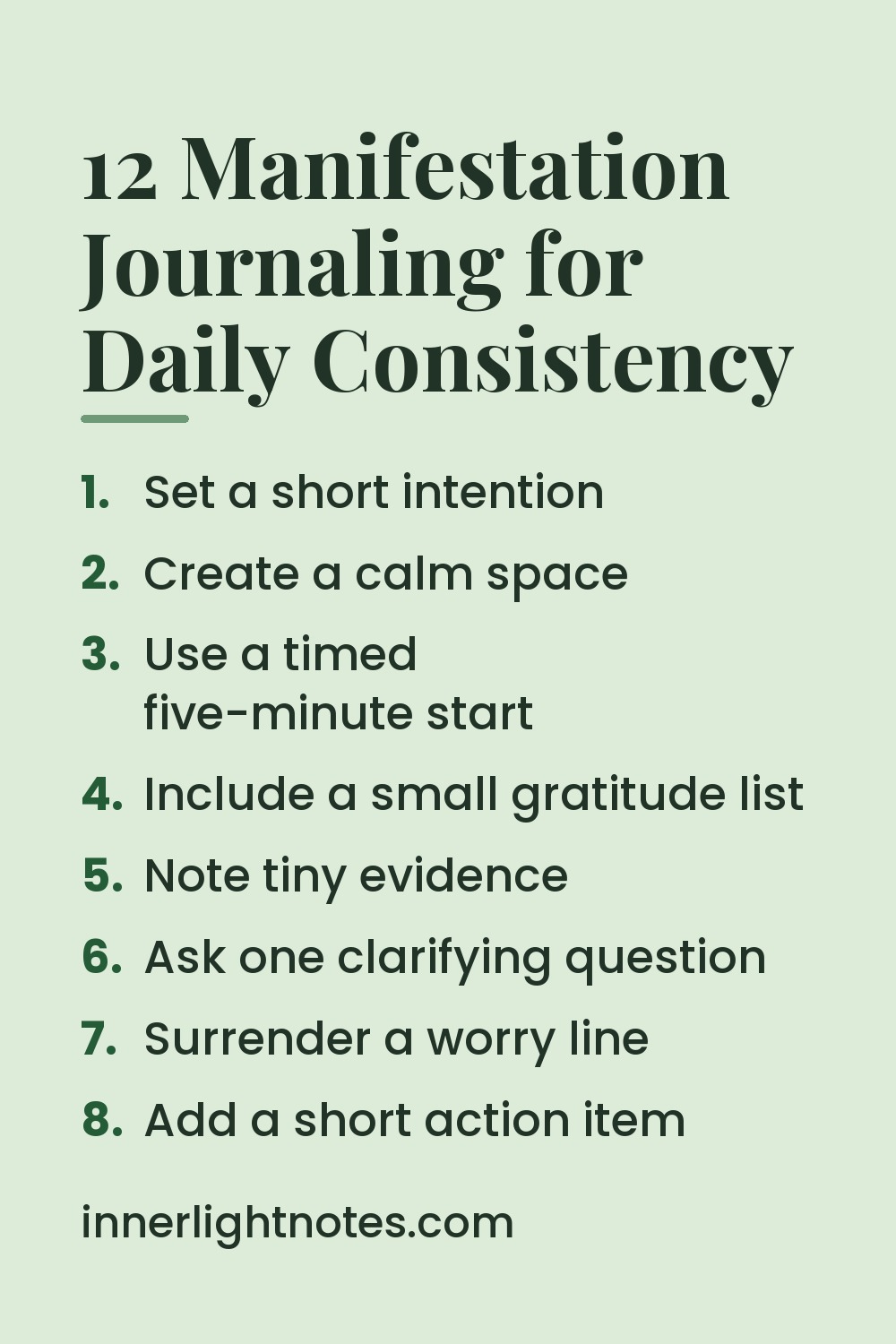
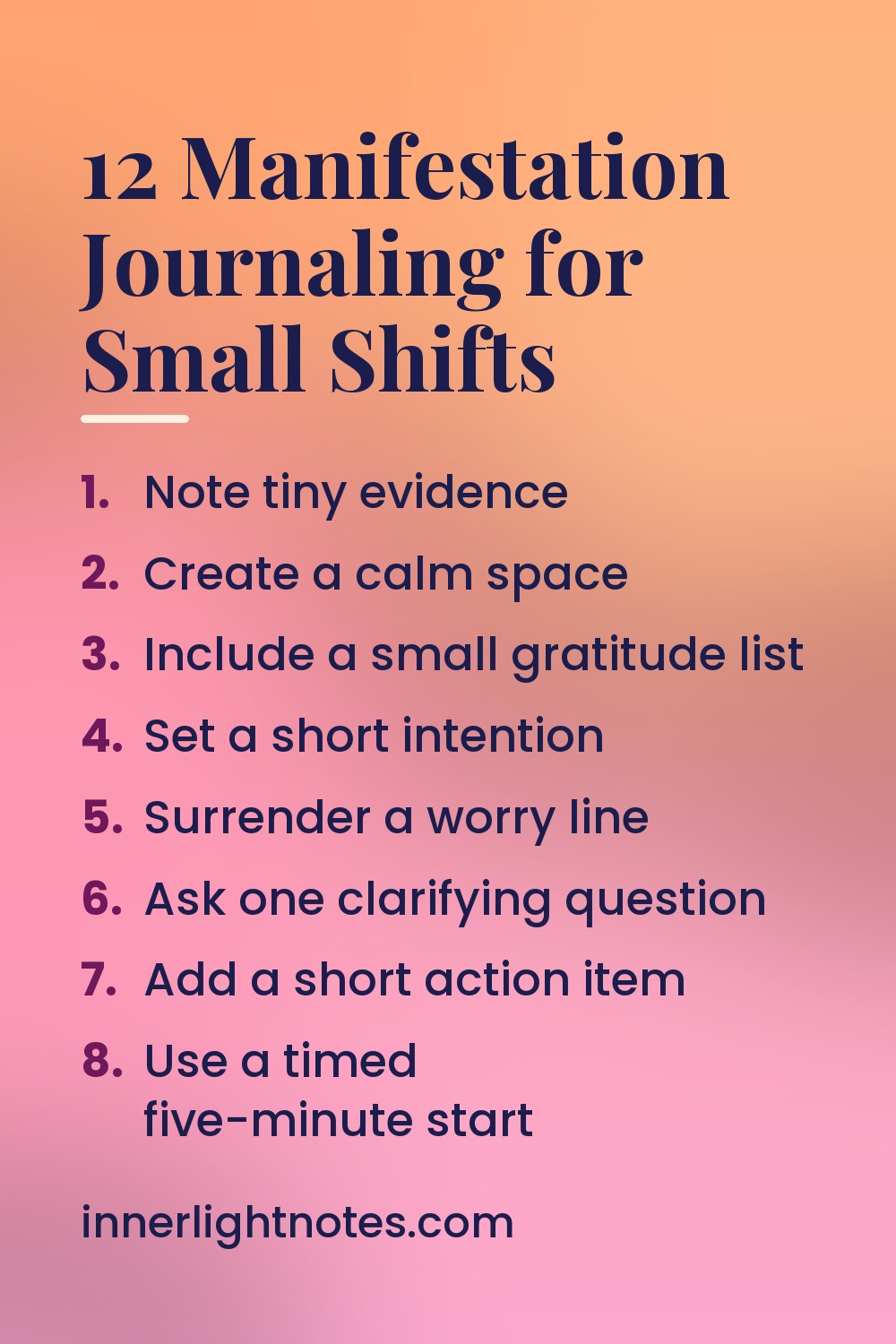
Set a short intention
Begin with one clear intention for your session and write it as a simple positive line. This focuses your attention so the page doesn't wander and keeps the practice small and doable. Example: 'I am opening to calmer mornings' rather than vague goals. Repeat the line at the top of the page to anchor the rest of your entry.
Create a calm space
Spend one minute arranging a quiet corner or placing a small object nearby before you write. A gentle ritual helps the brain shift from busy mode to reflective mode and signals care without needing perfection. Light a candle or tuck your phone away as a tiny boundary. This small setup reduces friction for future sessions.
Use a timed five-minute start
Set a simple timer for five minutes and commit to writing until it stops so you avoid overthinking. Short timers lower resistance and train consistency, especially on busy days. Write whatever comes around your intention, even fragmented thoughts or single words. You can extend the timer later, but the short burst protects momentum.
Write as if it already is
Describe your intention in present-tense detail to practice clarity and imagination without grand claims. This style helps you notice how it feels to have what you want and creates useful specifics for your mind to rehearse. For example, 'My evenings feel peaceful and work slows down by 7 p.m.' Stay realistic and grounded in sensory detail.
Include a small gratitude list
End your entry with three brief things you appreciate today to balance desire with acknowledgement. Gratitude shifts perspective toward noticing what is present and supports calmer expectation. Keep items specific and immediate, like 'tea tasted warm' or 'a quick call with a friend.' This takes under a minute and ends the page gently.
Note tiny evidence
Scan your week for small signs that relate to your intention and jot them down as short notes. Recording tiny evidence trains you to notice progress and patterns without dramatizing outcomes. Example notes: 'Neighbor smiled when I asked for help' or 'I chose a healthier snack mid-afternoon.' Over time these notes build a habit of attention.
Ask one clarifying question
Write a single open question that helps you refine your intention or next action, then pause and let an answer emerge. Questions like 'What small step can I try tonight?' invite practical guidance and reduce overwhelm. You might write the first spontaneous thought as an experiment rather than a command. Use that answer as a tiny next-step.
Surrender a worry line
Dedicate one sentence to releasing a worry by writing, then crumpling or marking it done. Physically signaling release helps you notice control without pushing for certainty. For example write, 'I release my worry about timing' and fold the page corner or mark it complete. This practice creates gentle boundaries between intention and anxiety.
Add a short action item
Choose one small, specific action you will take in the next 24 hours and record it as a checklist line. Keep it concrete and brief, such as 'Set alarm five minutes earlier' or 'Send one friendly message.' This links journaling to everyday life and gives the mind a practical experiment instead of merely hoping.
Use a consistent cue
Anchor journaling to an existing daily habit like after breakfast or before bed so it becomes easier to repeat. Consistent cues reduce resistance and turn intention into routine without strict rules. Place your journal where you will see it at that time, and commit to five minutes so it stays doable. Over weeks, the cue builds quiet momentum.
Reflect weekly patterns
Once a week, read back five recent entries and highlight recurring themes or small wins to inform your next intentions. This low-effort review helps you spot patterns and adjust intentions with curiosity rather than pressure. Circle repeated feelings or actions and jot one improvement idea. A weekly glance keeps the practice adaptive and kind.
Close with a hopeful note
Finish each session with a one-line affirmation or calming sentence that feels believable for you, then breathe three slow breaths. This signals completion and helps the nervous system settle after writing. Choose something grounded like 'I will try one kind step today' rather than sweeping claims. Keep it short so you can return easily tomorrow.
Get the 30 free affirmation cards
Phone-sized cards with one calm line each, sent straight to your inbox.
Free. Unsubscribe anytime. We only use your email to send the cards and new lists. Privacy
How to use these manifestation journaling steps
Choose a simple daily framework you will actually keep. Try this 3-step mini routine to start: 1) Cue and setup: pick a consistent signal like after your morning tea and arrange a small calm space. 2) Core practice: set a five-minute timer, write one clear intention in present tense, include one tiny action and one gratitude line. 3) Close: note any small evidence, write a short surrender sentence, and take three slow breaths. Do this five days in a row, then add a weekly five-minute review where you read five recent entries and circle themes. If time is tight, follow the one-minute setup and one-minute intention with a three-minute free-write. Keep it flexible: the purpose is steady attention and small experiments, not perfection. Track only what helps you notice shifts and learn what next steps feel right. Try to keep entries compact so you don’t dread them; the smallest consistent practice beats occasional long sessions.
Frequently asked questions
How long should a manifestation journaling session be?
Start with five minutes to lower friction and build consistency. Many people keep sessions short on busy days and extend them when inspired. The point is a regular habit, not a set duration, so let the timer guide you rather than pressure.
What should I write if I doubt manifestation works?
Use doubt as material—write one sentence about what you doubt and one small step you are willing to try. That approach respects uncertainty while keeping practice active. Observing doubt calmly helps you notice whether thoughts shift over time without forcing belief.
How often should I review my journal entries?
Aim for a brief weekly review of five recent entries to spot patterns and adjust intentions. Keep the review focused: highlight recurring themes and note one tiny change to try. This rhythm keeps the practice alive and avoids endless re-reading of old pages.
One small step for today
Pick one of the 12 steps and do it now. If you have five minutes, set your timer, write one present-tense intention, list three small gratitudes, and choose one tiny action for tomorrow. Close with three deep breaths. Try it tonight and notice how it feels to finish a short, kind practice.
Take the cards with you
Want the list later? Get the 30 cards now and a short note when we publish a new list.
- I notice small signs today
- I choose one gentle step
- I am open to subtle shifts
Free. Unsubscribe anytime. We only use your email to send the cards and new lists. Privacy